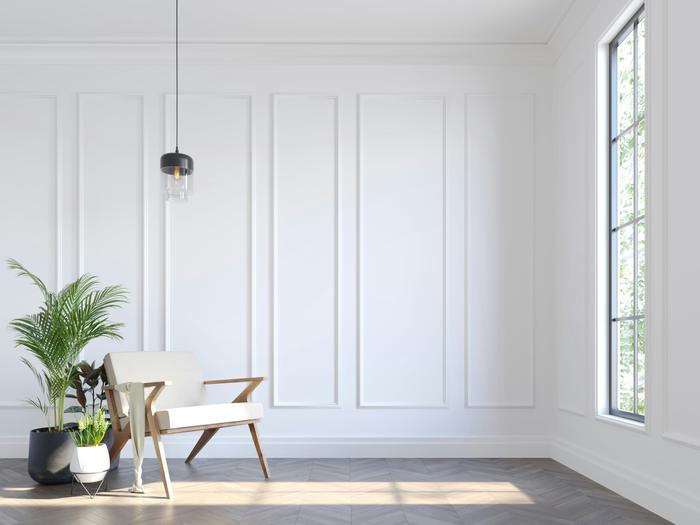
A Sanatani way of looking at the spaces around us
There is a thought deeply woven into Sanatani philosophy: the world around us is not separate from us.
We are shaped by what we consume, what we listen to, what we see, what we surround ourselves with and, most quietly of all, by the spaces we inhabit every day.
A home is therefore more than four walls and a roof.
It is where we wake up, where we gather, where we rest, where we think, where we celebrate and where we become, little by little, who we are.
Long before interior design became an industry, Indian thought had a language for understanding the relationship between human beings, nature and space.
Not as decoration.
As harmony.
---
Yatha pinde tatha brahmande.
As is the individual, so is the universe.
One of the recurring ideas across Sanatani thought is that the human being and the cosmos are not entirely separate. The same elements that exist in the world around us exist within us.
Earth. Water. Fire. Air. Space.
This way of seeing the world changes how we might think about a room.
A space isn't simply something we fill with objects. It has light, proportion, movement, texture, openness and stillness. It can feel heavy or light. Restless or peaceful. Cold or welcoming.
And while modern design might describe these things through colour theory, ergonomics or spatial psychology, the older Indian imagination approached the relationship more holistically.
The space around you participates in the experience of being you.
Perhaps that is why a beautiful home has never really been about having beautiful things.
It has been about creating a beautiful way of living.
---
Sthāna: there is meaning in where we are
The Sanskrit idea of sthāna refers to place, position or location.
But a place, in the Indian imagination, was rarely just a physical coordinate.
A temple had a particular spatial logic because it was meant to facilitate a particular state of being.
A courtyard brought light, air and people together.
A diya transformed a corner of a home not because it was an expensive object, but because of what its presence represented.
The threshold mattered.
The centre mattered.
The direction of the morning light mattered.
There was an understanding that different spaces invite different states of mind.
And perhaps we intuitively understand this even today.
We create a quiet corner to read.
We gather around a dining table.
We keep photographs of people we love where we can see them.
We put flowers in a room because somehow, the room feels different when something living is in it.
None of this is accidental.
We are constantly arranging our surroundings to create the lives we want to live.
---
Beauty was never merely ornamental
There is another distinctly Indian idea worth remembering: beauty and meaning were never necessarily opposites.
The Sanskrit word sundaram points towards beauty, but Indian aesthetics traditionally went much deeper than simply making something visually pleasing.
The arts were capable of evoking rasa, a felt experience, an emotional flavour.
Perhaps this gives us another way to think about interiors.
A room can have a rasa.
Some spaces energise us.
Some calm us.
Some make us nostalgic.
Some make us want to linger.
Some simply make us feel at home.
So when we choose a sculpture, a lamp, a painting or even an empty patch of wall, we are not only choosing how the room looks.
We are choosing, consciously or otherwise, how we want the room to feel.
And that feeling becomes part of our everyday life.
---
Prakriti was never meant to be far away
Modern life has created a strange separation.
We spend much of our time surrounded by things made by humans, under artificial light, inside constructed environments, and then go looking for nature as an escape.
The Sanatani worldview offers a different relationship with prakriti.
Nature isn't merely somewhere we visit.
We are part of it.
This is why traditional Indian spaces so often embraced courtyards, water, sunlight, plants, natural materials, breeze and the changing rhythms of the day.
The purpose wasn't necessarily to make a room look “natural.”
It was to allow the human experience to remain connected to the larger world.
A window isn't just an architectural opening.
It is a relationship with light.
A plant isn't just décor.
It is a reminder of life.
A stone object carries something different from plastic.
Wood ages.
Metal changes.
Clay remembers the hand that shaped it.
Perhaps good interiors don't need to imitate nature.
They simply need to leave room for nature to be present.
---
The home as an extension of the self
There is something revealing about the things we choose to keep around us.
A home slowly becomes a collection of our memories, our aspirations, our tastes and our stories.
The books we keep.
The photographs we frame.
The objects we inherited.
The things we brought back from somewhere we loved.
The sculpture we couldn't stop thinking about.
The chair everyone fights over.
The little corner nobody planned but somehow became everyone's favourite.
These things make a house personal.
And perhaps that is the most beautiful lesson we can take from the Sanatani view of space:
A meaningful life does not happen somewhere outside the objects and spaces around us.
It happens within them.
---
So, what makes a space good?
Maybe it isn't the number of things inside it.
Maybe it isn't whether everything matches.
Maybe it isn't even whether the room follows a particular style.
Perhaps a good space is one that allows you to become more fully yourself.
A space that gives you room to breathe.
A space that welcomes people.
A space that remembers.
A space that makes ordinary moments feel a little less ordinary.
A space that brings some balance between prakriti and purusha, between movement and stillness, between what we need and what we simply love.
The modern world has given us countless ways to decorate our homes.
The Sanatani tradition offers something slightly different.
A way to think about why we create them.
Because ultimately, we don't decorate spaces simply to look at them.
We live inside them.
And perhaps the spaces we choose to live in quietly become a part of the life we choose to live.
Urban Nest
Just The Right Feel.